
University of Louisiana at Lafayette
Search results: 299
Introduction to the Data-Driven Business Solutions Module
Introduction
Welcome to the Data-Driven Business Solutions Module. This self-paced online module is designed for undergraduate business students who are looking to enhance their skills in using data to solve business problems. In today's data-centric world, the ability to analyze data and draw actionable insights is a critical skill for any business professional. This module will guide you through the process of identifying business problems, selecting and analyzing relevant data, developing data-driven solutions, and effectively communicating your findings.
Throughout this module, you will engage with various educational resources, including readings, videos, interactive activities, and quizzes. Each unit is structured to build upon the previous one, ensuring a comprehensive understanding of the data analysis process. Upon completion, you will take a comprehensive quiz to test your overall knowledge and application of the concepts learned.
Learning Objectives
By the end of this module, you will be able to:
Identify Business Problems:
- Understand and articulate various business problems that can be addressed through data analysis.
- Frame and define clear problem statements.
Select Relevant Data:
- Determine and justify the selection of appropriate data sources for specific business problems.
- Differentiate between qualitative and quantitative data and understand their uses.
Analyze Data Effectively:
- Apply descriptive and inferential statistical techniques to analyze data.
- Use software tools such as Excel, Tableau, and SPSS for data analysis and visualization.
Develop Data-Driven Solutions:
- Interpret data insights to formulate actionable solutions to business problems.
- Create strategic plans and recommendations based on data analysis.
Communicate Findings:
- Develop effective communication strategies to present data findings.
- Use visual aids and storytelling techniques to convey insights to stakeholders.
- Create professional visual reports and interactive dashboards.
- Teacher: Dione Davis
- Teacher: Anthony Musacchia
- Teacher: Francisco Garcia-Rubio
- Teacher: Thomas Beasley
- Teacher: Caroline Jurisich
This course will provide students with a firm foundation in the sub-field of comparative politics, preparing them for further analysis of politics around the world and across contexts. The course has two main objectives:
1. To familiarize students with the importance of theory and research design for describing, explaining, and understanding political processes. After taking this course, students should be able to distinguish between different theoretical explanations and evaluate the merit of evidence used to support them.
2. To provide students with an overview of key topics and debates in comparative politics. Students should be able to understand the basis of these debates as well as take and support positions on them.
- Teacher: Shaun Williams
=> INFX 435. Emphasis on query language.
=> INFX 531. Advanced aspects of database management systems, including advanced normalization and de-normalization, query optimization, object-oriented and object-relational databases, data warehousing, data mining, distributed databases, XML, XSL, and databases for web applications.
Graduate students enrolled in INFX 531-001 have additional (and advanced) requirements.
- Teacher: Michael Totaro
- Teacher: Allison Cointot

- Teacher: Ian Beamish
- Teacher: Jordan Begnaud
- Teacher: Samantha Billing
- Teacher: Abbass Braham
- Teacher: Clifton Carmon
- Teacher: Robert Carriker
- Teacher: Andrew De La Garza
- Teacher: Theodore Foster
- Teacher: Richard Frankel
- Teacher: Robin Hermann
- Teacher: Ray Lucas
- Teacher: Michael Martin
- Teacher: Chad Parker
- Teacher: Marissa Petrou
- Teacher: Tyler Quebedeaux
- Teacher: Carl Richard
- Teacher: Sarah Rodriguez
- Teacher: Chester Rzadkiewicz
- Teacher: Kaitlin Simpson
- Teacher: Liz Skilton
- Teacher: Yevan Terrien
- Teacher: Thomas Cline
- Teacher: Sarah Young
- Teacher: James Tancill
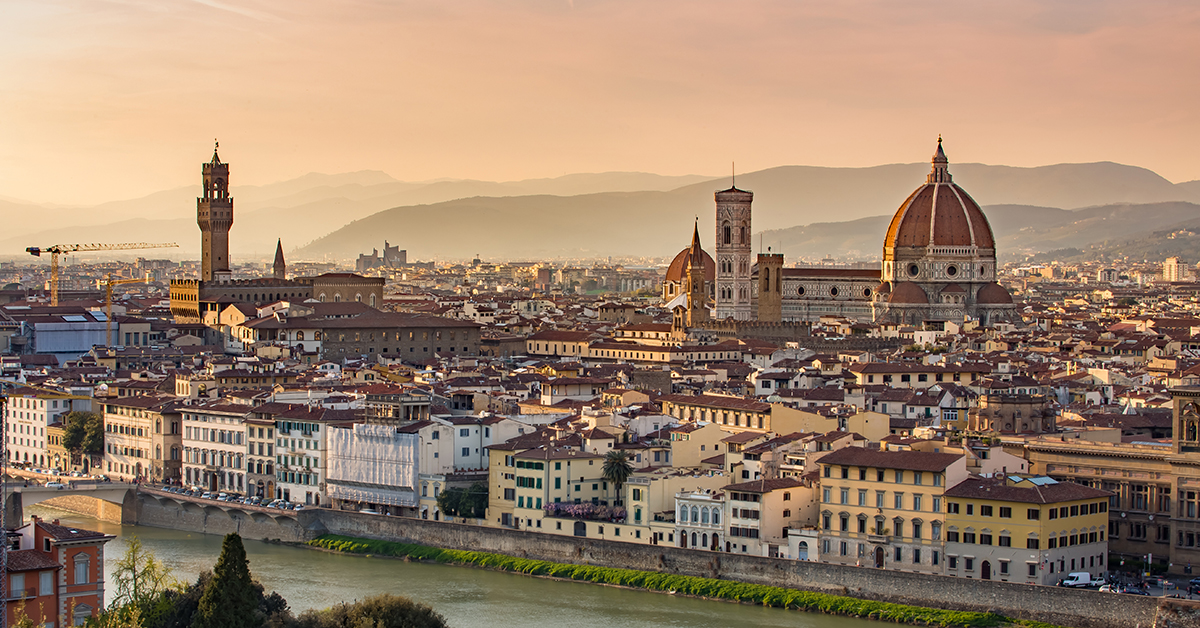
You will visit some of the most important museums in Florence and they will serve as our classroom including the Uffizi Gallery, Museo dell’Opera del Duomo, Museo degli Argenti Bargello Museum, Boboli Gardens, Academia, the Fondazione Bisonte, and the Armadillo Atelier to study prints, drawings, and paintings first hand. These locations will serve as sources of inspiration allowing you to develop a greater awareness of the role of drawing and the print has as an investigative process in the development of creative work and it’s use as an expressive means of communication. Students develop a site-responsive studio practice in relationship to the cultural landscape of Florence. We will consider the unique identity of particular sites and structures, land use, and use our experiences on-location to inspire and frame ideas for our work. We will work both in the studio and on-site in the city. Practical and didactic learning will include a complement of methodologies: texts, lectures, films, demonstrations, site visits, field work, and travel to Venice and other sites outside of Florence.
Students will develop a suite of prints through a series of prompts. Ultimately, all students will have the power to make independent work that explores their own visual and media interests. This course will give students a greater awareness of the role of drawing as an investigative process in the development of creative work and it’s use as an expressive means of communication. This course will be divided between working on creative work on location in Florence and utilizing the cities world class museums and galleries and individual work outside of class. Students will also learn how to utilize a sketchbook/journal in the development of creative research, the documentation of the city, and a source for the stimulation and development of ideas.
- Teacher: Brian Kelly
Students in this course will be explore the development and the influence of the Renaissance period in Florence had upon both the art of printmaking and the formation of the new career of printmaker during the late fifteenth century and throughout the sixteenth century in Italy. Students will also be exposed to historical prints and drawings that explore the context of related paintings, sculpture, and architecture, describing a period when printmaking opened up new ways to make a living and transformed the mechanisms of Renaissance visual culture.Students will study works Giovanni Pietro da Birago, Cornelis Cort, Mantegna, Durer, Leonardo, Michelangelo, Donatello, among others from the Renaissance period.
Additionally, students will also read scholarship that surrounds the development of the Renaissance period, its relationship to printmaking, along with the history of printmaking.
- Teacher: Brian Kelly
This course will provide students with a firm foundation in the sub-field of comparative politics, preparing them for further analysis of politics around the world and across contexts. The course has two main objectives:
1. To familiarize students with the importance of theory and research design for describing, explaining, and understanding political processes. After taking this course, students should be able to distinguish between different theoretical explanations and evaluate the merit of evidence used to support them.
2. To provide students with an overview of key topics and debates in comparative politics. Students should be able to understand the basis of these debates as well as take and support positions on them.
- Teacher: Shaun Williams
inspiration and for interpretive exploration. Guided by individual interests and
artistic medium, students will examine and use the city of Italy’s landscape,
museums and culture as sources for creative exploration and research. This
course will give students a greater awareness of the role of drawing,
photography, painting, and printmaking as an investigative process in the
development of creative work and it’s use as an expressive means of
communication. This course will be divided between working on creative work on
location in Italy and utilizing the cities world class museums and galleries.
Students will also learn how to utilize a sketchbook/journal/phone in the
development of creative research, the documentation of the city, and a source for
the stimulation and development of ideas.
- Teacher: Brian Kelly
Students in this course will be explore the development and the influence of the Renaissance period in Florence had upon both the art of printmaking and the formation of the new career of printmaker during the late fifteenth century and throughout the sixteenth century in Italy. Students will also be exposed to historical prints and drawings that explore the context of related paintings, sculpture, and architecture, describing a period when printmaking opened up new ways to make a living and transformed the mechanisms of Renaissance visual culture.Students will study works Giovanni Pietro da Birago, Cornelis Cort, Mantegna, Durer, Leonardo, Michelangelo, Donatello, among others from the Renaissance period.
Additionally, students will also read scholarship that surrounds the development of the Renaissance period, its relationship to printmaking, along with the history of printmaking.
- Teacher: Brian Kelly
- Teacher: Michael Totaro
- Teacher: Camille Bulliard
- Teacher: Michael Crotty
- Teacher: Rumaan Baloch
- Teacher: Christine Williams