
University of Louisiana at Lafayette
Search results: 878
Survey of federal and state legislation, characteristics of students with exceptional learning needs, and strategies for inclusive teaching.
- Teacher: Caroline Jurisich
Category: Curriculum & Instruction
Survey of federal and state legislation, characteristics of students with exceptional learning needs, and strategies for inclusive teaching.
- Teacher: Thomas Beasley
Category: Curriculum & Instruction
Survey of federal and state legislation, characteristics of students with exceptional learning needs, and strategies for inclusive teaching.
- Teacher: Thomas Beasley
Category: Curriculum & Instruction
Survey of federal and state legislation, characteristics of students with exceptional learning needs, and strategies for inclusive teaching.
- Teacher: Thomas Beasley
Category: Curriculum & Instruction
Survey of federal and state legislation, characteristics of students with exceptional learning needs, and strategies for inclusive teaching.
- Teacher: Thomas Beasley
Category: Curriculum & Instruction
Focuses on relevant special education policy and practice in transition assessment and planning for secondary students with disabilities.
- Teacher: Thomas Beasley
Category: Curriculum & Instruction
Various conceptions of creativity. Methods for eliciting creative thinking from students, application of creative problem solving strategies, and exploration of personal creativity.
- Teacher: Micah Bruce-Davis
Category: Curriculum & Instruction
Theoretical models, program development and evaluation, and current trends in planning of curriculum for gifted students.
- Teacher: Christine Briggs
- Teacher: Toby Daspit
Category: Curriculum & Instruction
Why do some countries hold elections while others do not? Why are some states able to provide security and welfare to their citizens while others struggle to do so? Why are some countries plagued by violence while others enjoy internal peace? These questions have long animated the field of comparative politics and are among the several of which we will explore this semester.
This course will provide students with a firm foundation in the sub-field of comparative politics, preparing them for further analysis of politics around the world and across contexts. The course has two main objectives:
1. To familiarize students with the importance of theory and research design for describing, explaining, and understanding political processes. After taking this course, students should be able to distinguish between different theoretical explanations and evaluate the merit of evidence used to support them.
2. To provide students with an overview of key topics and debates in comparative politics. Students should be able to understand the basis of these debates as well as take and support positions on them.
This course will provide students with a firm foundation in the sub-field of comparative politics, preparing them for further analysis of politics around the world and across contexts. The course has two main objectives:
1. To familiarize students with the importance of theory and research design for describing, explaining, and understanding political processes. After taking this course, students should be able to distinguish between different theoretical explanations and evaluate the merit of evidence used to support them.
2. To provide students with an overview of key topics and debates in comparative politics. Students should be able to understand the basis of these debates as well as take and support positions on them.
- Teacher: Shaun Williams
Category: Political Science
This course has additional cost. Learn more at online.louisiana.edu/get-started/tuition-cost. This section is reserved for students in the fully online programs of GSO, HPW, HSA, RN-to-BSN & MGMO as well as students in the MS Informatics Online program.
- Teacher: Lorrie Joubert
Category: Mathematics
This course has additional cost. Learn more at online.louisiana.edu/get-started/tuition-cost. This section is reserved for students in the fully online programs of CJUO, INFO, GSO, HPW, HSA, RN-to-BSN & MGMO.
- Teacher: Lorrie Joubert
Category: Mathematics
This course has additional cost. Learn more at louisiana.edu/studentcashier/tuition-fees/current-tuition-fees/online-hybrid-programs. This section is reserved for students in the fully online undergraduate programs of CJUO, GSO, HPW, HSA, RN-to-BSN, MGMO, MKTO, EHKO & SOCO as well as students in the Online MS Informatics program.
- Teacher: Rashida Bryant
Category: Mathematics
This course has additional cost. Learn more at online.louisiana.edu/get-started/tuition-cost. This section is reserved for students in the fully online programs of GSO, HPW, HSA, RN-to-BSN, INFO & MGMO.
- Teacher: Lorrie Joubert
Category: Mathematics
This course has additional cost. Learn more at louisiana.edu/studentcashier/tuition-fees/current-tuition-fees/online-hybrid-programs. This section is reserved for students in the fully online undergraduate programs of CJUO, GSO, HPW, HSA, RN-to-BSN, MGMO, MKTO, EHKO & SOCO as well as students in the Online MS Informatics program.
- Teacher: Rashida Bryant
Category: Mathematics
The Students of History Moodle page provides useful information for all undergraduate and graduate students working in the field of History at UL Lafayette.
- Teacher: Ian Beamish
- Teacher: Jordan Begnaud
- Teacher: Samantha Billing
- Teacher: Abbass Braham
- Teacher: Clifton Carmon
- Teacher: Robert Carriker
- Teacher: Andrew De La Garza
- Teacher: Theodore Foster
- Teacher: Richard Frankel
- Teacher: Robin Hermann
- Teacher: Ray Lucas
- Teacher: Michael Martin
- Teacher: Chad Parker
- Teacher: Marissa Petrou
- Teacher: Tyler Quebedeaux
- Teacher: Carl Richard
- Teacher: Sarah Rodriguez
- Teacher: Chester Rzadkiewicz
- Teacher: Kaitlin Simpson
- Teacher: Liz Skilton
- Teacher: Yevan Terrien
Category: Auto Enrolled Courses
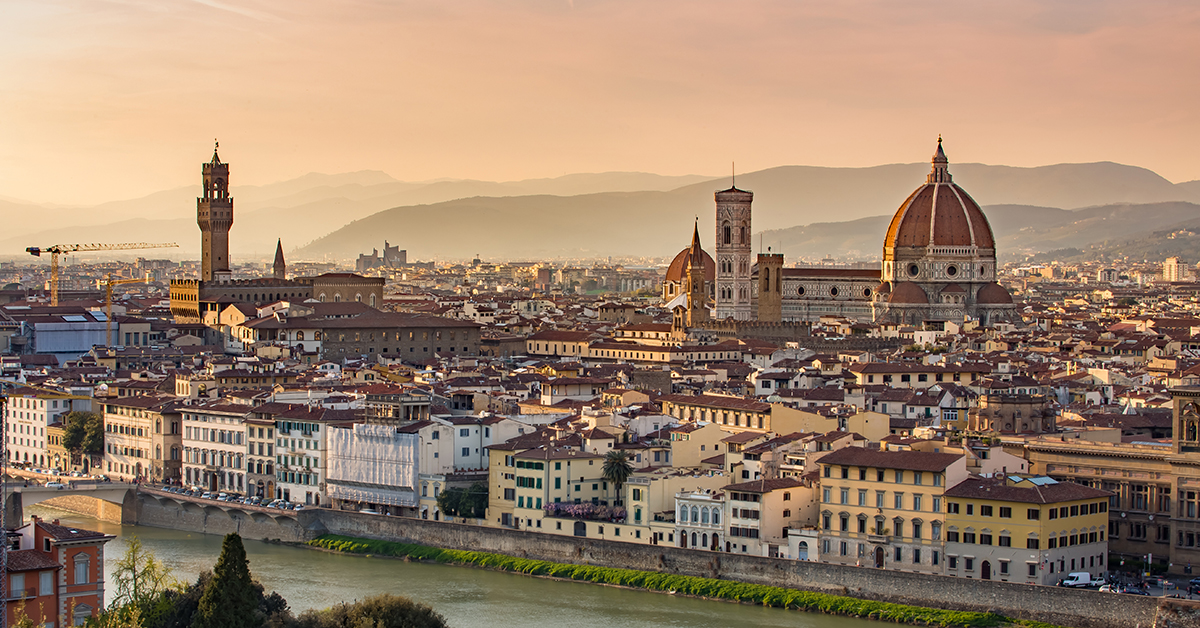
How do we understand the objects, buildings, and the ideas that we associate with design? What does it mean to be a designer and, as designers, how do we craft artifacts that exemplify Vitruvius’ call for utility, durability, and beauty? In this course, students will explore the reasons why some objects and buildings have had a lasting impact through readings and discussions of some of the most significant writings on craft and its relationship to design. Because the buildings and objects of design are best experienced in person, our discussions will take place in the buildings, museums, and workshops that best illustrate the ideas from our readings; the Galleria dell’Accademia, the Uffizi Gallery, the Museo Galileo, Brunelleschi’s Duomo, the Vespa Museum, and several others. This is a companion course to DSGN 471G – Field Analysis and it is strongly recommended that the two courses be taken together.
- Teacher: Thomas Cline
- Teacher: Sarah Young
Category: Architecture
Because each generation borrows the Earth from its children's children, we need to learn how to make the wisest choices for nature. Costa Rica is known as the Godfather of Ecotourism; any search engine lists it as the top destination in the world. We'll be ecotourists, sustainable tourists, adventure tourists, green tourists, responsible tourists and explore pristine beaches, rainforests, ziplines, businesses and attractions that bring in 1.4billion USD. In your ten unforgettable days abroad, learn about Costa Rica's tourism economy and how companies maintain nature's integrity while producing revenue. All students will bring an idea home to help in keeping our planet beautiful and business thriving forever.
- Teacher: Lisa Bowles
Category: Management
Explore London with your pocket-sized sketchbook and pens. We will visit various places, such as the Museum of London and British Museum, doodling the glorious history of the city! We will tour Kensington Palace and the Tower of London, finding stories of the Kings and Queens and doodling some more! We will experience the Museum of Jack the Ripper and the London Dungeons, doodling the gloom of London as well! This course is structured for both art majors and non-art majors. All levels of artistic skill are encouraged to join us since students are taught at their own level and encouraged to find their individual style of doodling! After all, doodling is a great way to keep the memory of your trip permanent and can make for great artwork.
- Teacher: James Tancill
Category: College of Liberal Arts
The Renaissance has long been fascinated by many themes including religion and ritual, archaeology, art and civilian, the natural world to tales of the monstrous and murder through tales and images of terrible things. Florence has been the home and has served as a source of inspiration for artists such as Michelangelo, Leonardo Da Vinci, Sandro Botticelli, Giotto, the poet Dante, among others. Like Florence’s great artists of the past, students will be guided by their individual interests while examining and using Florence’s landscape, museums and culture as sources for creative exploration and research.
You will visit some of the most important museums in Florence and they will serve as our classroom including the Uffizi Gallery, Museo dell’Opera del Duomo, Museo degli Argenti Bargello Museum, Boboli Gardens, Academia, the Fondazione Bisonte, and the Armadillo Atelier to study prints, drawings, and paintings first hand. These locations will serve as sources of inspiration allowing you to develop a greater awareness of the role of drawing and the print has as an investigative process in the development of creative work and it’s use as an expressive means of communication. Students develop a site-responsive studio practice in relationship to the cultural landscape of Florence. We will consider the unique identity of particular sites and structures, land use, and use our experiences on-location to inspire and frame ideas for our work. We will work both in the studio and on-site in the city. Practical and didactic learning will include a complement of methodologies: texts, lectures, films, demonstrations, site visits, field work, and travel to Venice and other sites outside of Florence.
Students will develop a suite of prints through a series of prompts. Ultimately, all students will have the power to make independent work that explores their own visual and media interests. This course will give students a greater awareness of the role of drawing as an investigative process in the development of creative work and it’s use as an expressive means of communication. This course will be divided between working on creative work on location in Florence and utilizing the cities world class museums and galleries and individual work outside of class. Students will also learn how to utilize a sketchbook/journal in the development of creative research, the documentation of the city, and a source for the stimulation and development of ideas.
You will visit some of the most important museums in Florence and they will serve as our classroom including the Uffizi Gallery, Museo dell’Opera del Duomo, Museo degli Argenti Bargello Museum, Boboli Gardens, Academia, the Fondazione Bisonte, and the Armadillo Atelier to study prints, drawings, and paintings first hand. These locations will serve as sources of inspiration allowing you to develop a greater awareness of the role of drawing and the print has as an investigative process in the development of creative work and it’s use as an expressive means of communication. Students develop a site-responsive studio practice in relationship to the cultural landscape of Florence. We will consider the unique identity of particular sites and structures, land use, and use our experiences on-location to inspire and frame ideas for our work. We will work both in the studio and on-site in the city. Practical and didactic learning will include a complement of methodologies: texts, lectures, films, demonstrations, site visits, field work, and travel to Venice and other sites outside of Florence.
Students will develop a suite of prints through a series of prompts. Ultimately, all students will have the power to make independent work that explores their own visual and media interests. This course will give students a greater awareness of the role of drawing as an investigative process in the development of creative work and it’s use as an expressive means of communication. This course will be divided between working on creative work on location in Florence and utilizing the cities world class museums and galleries and individual work outside of class. Students will also learn how to utilize a sketchbook/journal in the development of creative research, the documentation of the city, and a source for the stimulation and development of ideas.
- Teacher: Brian Kelly
Category: Visual Arts
Printmaking is both a tool and artistic practice that brings images to the pubic through illustrated books, newspapers, and through the production of artistic prints. The invention of the Gutenberg press helped transform Italy during the Renaissance period and during the 15th century prints were mass produced and created for the middle and lower class providing access to reproductions of artworks produced by artists such as Leonardo, Michelangelo, and Titan.
Students in this course will be explore the development and the influence of the Renaissance period in Florence had upon both the art of printmaking and the formation of the new career of printmaker during the late fifteenth century and throughout the sixteenth century in Italy. Students will also be exposed to historical prints and drawings that explore the context of related paintings, sculpture, and architecture, describing a period when printmaking opened up new ways to make a living and transformed the mechanisms of Renaissance visual culture.Students will study works Giovanni Pietro da Birago, Cornelis Cort, Mantegna, Durer, Leonardo, Michelangelo, Donatello, among others from the Renaissance period.
Additionally, students will also read scholarship that surrounds the development of the Renaissance period, its relationship to printmaking, along with the history of printmaking.
Students in this course will be explore the development and the influence of the Renaissance period in Florence had upon both the art of printmaking and the formation of the new career of printmaker during the late fifteenth century and throughout the sixteenth century in Italy. Students will also be exposed to historical prints and drawings that explore the context of related paintings, sculpture, and architecture, describing a period when printmaking opened up new ways to make a living and transformed the mechanisms of Renaissance visual culture.Students will study works Giovanni Pietro da Birago, Cornelis Cort, Mantegna, Durer, Leonardo, Michelangelo, Donatello, among others from the Renaissance period.
Additionally, students will also read scholarship that surrounds the development of the Renaissance period, its relationship to printmaking, along with the history of printmaking.
- Teacher: Brian Kelly
Category: College of Liberal Arts