
University of Louisiana at Lafayette
Search results: 34
This course has a Distance Learning (E-Learn) fee. Learn more at louisiana.edu/studentcashier/tuition-fees/current-tuition-fees/online-hybrid-programs.
- Teacher: Cheryl Metrejean
Category: Accounting
The studio projects will continue development and exploration of design abilities
introduced in previous studio courses including design process and development,
theoretical and conceptual analysis as well as verbal and visual presentation skills.
Project issues will increase in scope and complexity integrating a variety of skills and
knowledge from coursework and sources external to the studio. ARCH 302 is the
second Professional level of studios and as such, greater individual responsibility for
one’s own project is expected.
- Teacher: William Gjertson
- Teacher: Thomas Sammons
Category: Spring 2023 Metacourses
Forces and structural equilibrium; analysis of structural systems; moment and shear diagrams; stress and strain in structural members; stability, structural design in steel and timber; long span structural systems; earthquake and wind forces.
- Teacher: Michael Bienvenu
Category: Civil & Environmental Engr
Codes and construction practices; analysis of structural systems; structural design in steel and concrete; design of masonry and foundation structures; stability; long span structural systems; lateral forces.
- Teacher: Michael Bienvenu
Category: Civil & Environmental Engr
Traffic flow models, highway capacity and level of service analysis, transportation planning models, and highway safety.
- Teacher: Milhan Moomen
- Teacher: Xiaoduan Sun
Category: Civil & Environmental Engr
Preparation and analysis of public relations case studies in all sectors; analysis based on the Research, Objectives, Programming, Evaluation, and Stewardship (ROPES) model; problem-analysis and problem-solving skill development.
- Teacher: Ella Boushie
- Teacher: Thomas Madison
Category: Communication
Language acquisition in typically developing children. Data gathering and analysis methods in language development.
- Teacher: Bailey Cauthen
- Teacher: Shelby Easley
- Teacher: Patrick Rydell
Category: Communicative Disorders
Digital Logic design and implementation. Microprocessor hardware analysis, timing, and design. Effects of machine instructions on hardware.
- Teacher: Micheal Pratt
Category: Electrical & Computer Engr
Fourier transforms methods and applications. Discrete system methods. Z transform. Analysis and design of Analog and Digital filters and systems.
- Teacher: Zhongqi Pan
Category: Electrical & Computer Engr
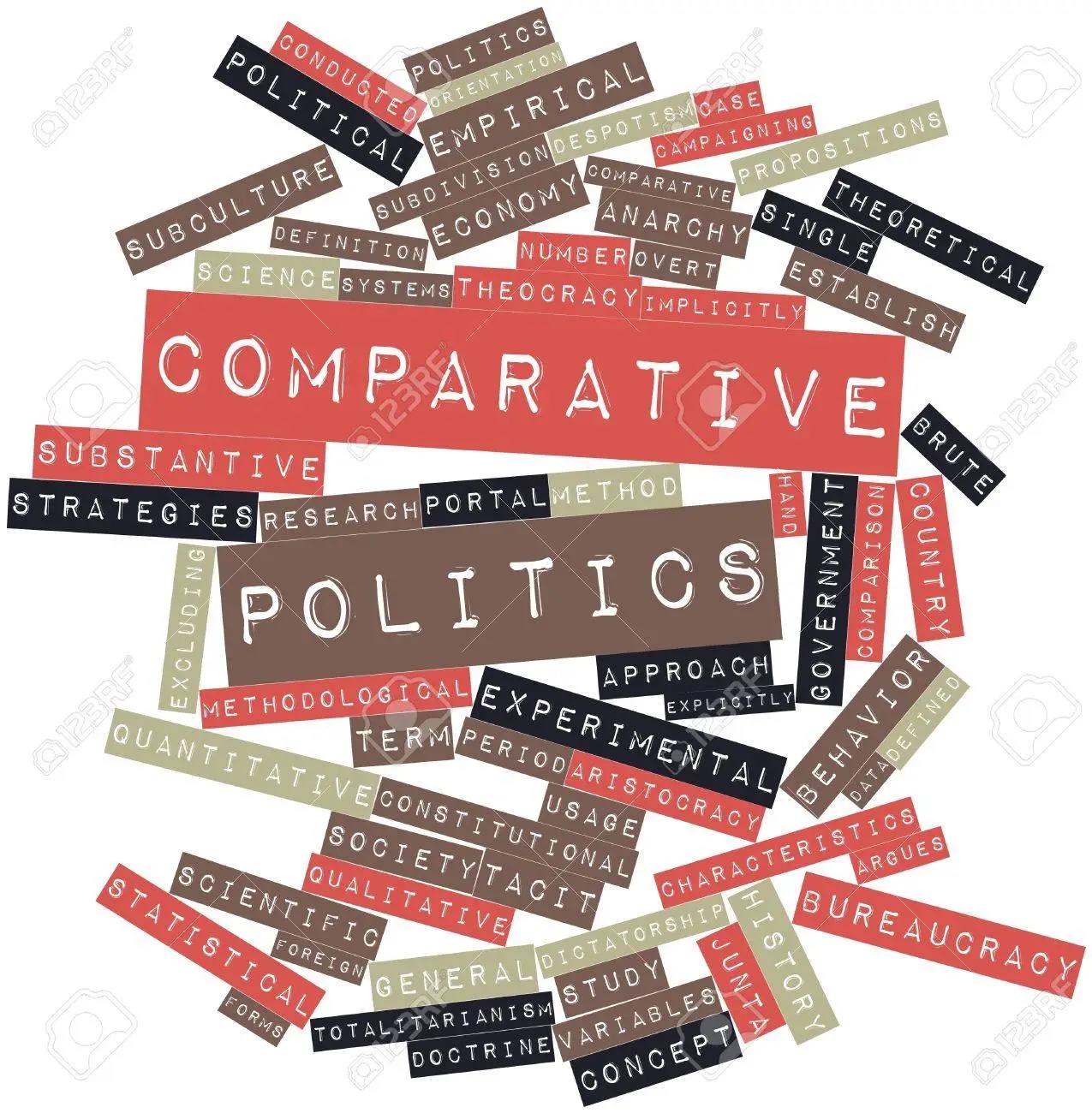
Why do some countries hold elections while others do not? Why are some states able to provide security and welfare to their citizens while others struggle to do so? Why are some countries plagued by violence while others enjoy internal peace? These questions have long animated the field of comparative politics and are among the several of which we will explore this semester.
This course will provide students with a firm foundation in the sub-field of comparative politics, preparing them for further analysis of politics around the world and across contexts. The course has two main objectives:
1. To familiarize students with the importance of theory and research design for describing, explaining, and understanding political processes. After taking this course, students should be able to distinguish between different theoretical explanations and evaluate the merit of evidence used to support them.
2. To provide students with an overview of key topics and debates in comparative politics. Students should be able to understand the basis of these debates as well as take and support positions on them.
This course will provide students with a firm foundation in the sub-field of comparative politics, preparing them for further analysis of politics around the world and across contexts. The course has two main objectives:
1. To familiarize students with the importance of theory and research design for describing, explaining, and understanding political processes. After taking this course, students should be able to distinguish between different theoretical explanations and evaluate the merit of evidence used to support them.
2. To provide students with an overview of key topics and debates in comparative politics. Students should be able to understand the basis of these debates as well as take and support positions on them.
- Teacher: Shaun Williams
Category: Political Science
Write a concise and interesting paragraph here that explains what this course is about
- Teacher: Hsiu-Yueh Hsu
Category: Informatics
This course investigates the structure and division of governmental powers under the United States Constitution, primarily through analysis of cases decided by the U.S. Supreme Court. Governmental powers under the U.S. Constitution is generally divided along a vertical axis, between state and national authorities, and along a horizontal axis, across the legislative, executive, and judicial branches of the national government. Specific topics to be emphasized include electoral administration, public health, climate change, legislative delegation to executive agencies, and judicial nullification of legislative and executive actions.
- Teacher: Jason Maloy
Category: Political Science
Write a concise and interesting paragraph here that explains what this course is about
- Teacher: Kyle Robichaux
- Teacher: Geoffrey Vanderpal
Category: Economics & Finance
Write a concise and interesting paragraph here that explains what this course is about
- Teacher: Xiangsheng Wang
Category: Mathematics
Computing communication and organizational systems; emphasis on vulnerabilities, threat analysis, models, attacks and recovery.
- Teacher: Mahshid Benchari
- Teacher: Yitoshee Rahman
Category: Informatics
Machine analysis, synthesis, and design application of mechanisms, analytical stress and deflection methods as well as computer simulations and use of engineering materials will be used to design machine parts and systems.
- Teacher: William Emblom
Category: Mechanical Engineering
Psychrometric processes, heating and cooling load calculations, heating and cooling systems, refrigerants and refrigeration systems, cryogenics. Analysis and design of a complete environmental control system.
- Teacher: Yonas Niguse
- Teacher: Peng Yin
Category: Mechanical Engineering
Study design, sample selection, data collection, statistical analysis, and interpretation and application of results.
- Teacher: Alec Slepchuk
Category: Marketing & Hospitality
Survey of theories of tonal music, and their corresponding analytical methods. Emphasis on Rameau, Riemann, and Schenker.
- Teacher: Wesley Bradford
Category: Music
Probability, sampling distributions, interval estimation, hypothesis testing, and simple regression; emphasizes computerized statistical analysis.
- Teacher: Guolin Lai
Category: Marketing & Hospitality